




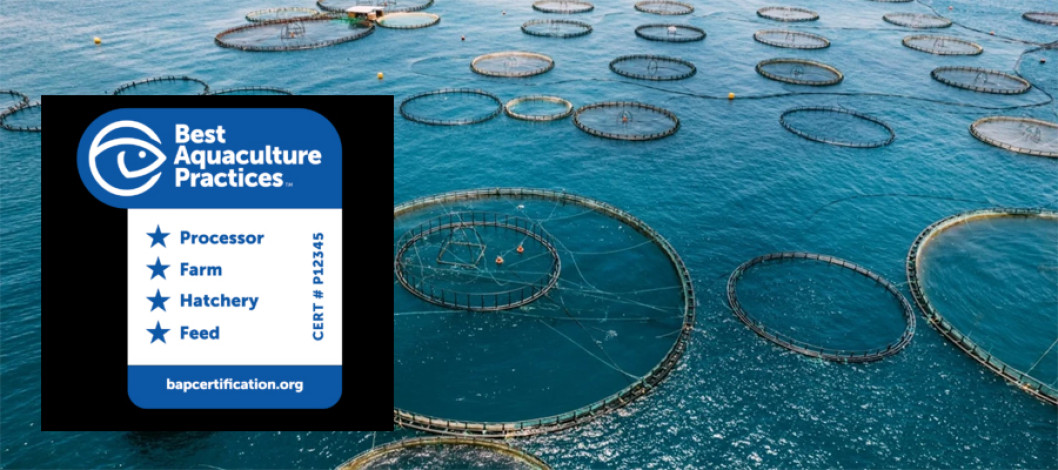
Best Aquaculture Practices (BAP) is a third-party certification program developed by Global Seafood Alliance (GSA) that covers the entire farmed seafood production chain. The four star system is used to represent each piece of this chain, which includes the processing plant, farm, hatchery and feed mill. A four-star designation is the highest achievable for BAP-certified producers, and means that every facility in the production chain has attained BAP certification, which requires passing an annual third party audit.
What Each Star Stands For
⭐ 1-Star BAP → Processing plant
⭐⭐ 2-Star BAP → Processing plant + farm
⭐⭐⭐ 3-Star BAP → Processing plant + farm + hatchery or feed mill
⭐⭐⭐⭐ 4-Star BAP → Entire production chain certified (processing plant, farm, hatchery and feed mill)
Each of these steps are an important part of the aquaculture production chain – the processing plant is where the product is processed and packaged before reaching its final destination; the farm is where the fish are grown to harvest size; the hatchery is where the fish are reared and raised; and the feed mill is where fish feed is produced. At each of these steps, BAP standards cover environmental responsibility, social accountability, food safety and animal welfare. The number on the label (or elsewhere on the package) represents the processing plant where the product was packaged before reaching you.
Why the Four Star System Matters
BAP is the only aquaculture certification program in the world with standards that cover every step in the production chain. These comprehensive standards allow BAP to provide a greater level of assurance as well as chain of custody traceability between each of these step in the production chain. To attain certification, the producer must pass an annual third-party audit and correct any non-conformities found during the audit to receive their certificate.
You can learn about South Asia's
largest exhibition on this topic through this link: https://www.dpexpobd.com/
Source: Email/GFMM





















Comment Now