




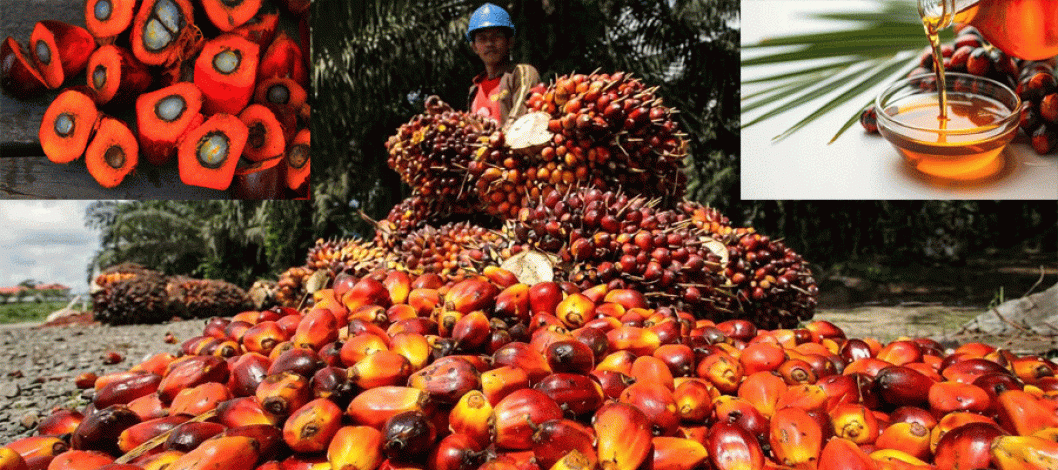
Photo: Collected
The Indonesian Palm Oil Association (GAPKI) has ensured that the transition of palm oil export through the newly-established PT Danantara Sumberdaya Indonesia (DSI) will not hinder the activities of Indonesia’s palm oil trade and exports. During the transition period from June to August 2026, all companies are still allowed to conduct their normal activities of palm oil exports.
GAPKI Chairman Eddy Martono said that basically during the transition period there will be no significant change in the mechanism of export activities. “Exporting companies can still sell and ship their palm products to international market, while the DSI will function to receive reports of export activities from business players,” he said.
According to Eddy, the new export scheme ensures that crude palm oil (CPO) trading activities will continue as usual and there will be no disruptions to the supply chain or trade contracts with foreign buyers.
The certainty has eased the worries of palm oil industry players, who had been closely monitoring with concern the impact of the centralized management system of the Indonesia’s strategic commodity, palm oil, under the newly established entity DSI. Several business players believe that clarity regarding the transition mechanism is crucial for maintaining global market confidence in Indonesia’s palm oil supply.
As of now, GAPKI has not observed any changes affecting CPO and palm oil derivative export activities. Therefore, the Indonesia’s largest palm oil business organization hopes the market will respond positively to the certainty provided by the government regarding the implementation of the DSI transition period.
However, industry players are still awaiting technical guidelines that will guide the implementation of the new export policy. These technical guidelines will regulate reporting mechanisms, administration, and coordination between exporters and the DSI during the transition period.
GAPKI believes that the existence of these technical guidelines is crucial to avoid uncertainty among exporters and international buyers. With clear regulations, it is hoped that the flow of Indonesian palm oil exports will remain stable and the competitiveness of national products can be maintained in the global market.
Furthermore, Eddy is optimistic that the performance of Indonesia’s palm oil exports has the potential to improve if companies are still given the freedom to conduct direct trading activities. Under such scheme, the DSI focuses only on reporting, monitoring, and coordination functions without hindering existing business processes.
Such optimism aligns with industry players’ hopes that changes to export governance will strengthen the efficiency of the national palm oil sector. Palm oil remains a key commodity contributing to the country’s foreign exchange earnings and supporting Indonesia’s trade balance.
The government has designated the period from June to August 2026 as a transition period for the implementation of the new centralized export scheme by DSI. Once all supporting systems and regulations are in place, the policy will be implemented in stages, depending on the readiness of the government and business players.
For the palm oil industry, the success of the DSI transition period will be crucial in maintaining the smooth flow of Indonesian palm oil exports. With the support of clear regulations and strong coordination between the government and business players, exports of CPO and palm oil derivatives are expected to continue to grow, strengthening Indonesia’s position as the world’s largest palm oil producer and exporter.
You can learn
about South Asia's largest exhibition on this topic through this link: https://oilfatbd.com/
Source: Online/GFMM





















Comment Now