




Rains improve crop sales
Australian Premium White ended the month at $284/mt May 29,
up $10/mt from May 4, while Australian Standard White rose $7/mt to $276/mt
during the same period, according to data from Platts, part of S&P Global
Energy.
Prices extended their gains from April, as grower sales
remained limited for much of May with winter crop sowing in full swing,
according to multiple Australian trade sources.
Concerns over lower production in the 2026-27 crop season
(October-September) have also not abated, though prospects are looking much
better in the driest cropping regions of northern New South Wales and
Queensland, thanks to ample rains across late May, with some areas receiving up
to 100 millimeters in the month.
“There is definitely more old crop selling, and the NSW
surplus is starting to come out from growers. The season and the El Nino
narrative have been turned on their heads. All the exporters and domestic
buyers are getting calls from growers and their agents. This is happening right
across the East Coast,” a Victoria-based trade source said late May.
“This could change planting intentions and lead to more
barley and even wheat being planted in June,” another Perth-based trade source
said. “Everyone has got very bearish domestically with all the rain we have
been seeing.”
Other Asian trade sources also pointed to a weaker
Australian dollar, which fell below 72 US cents mid-May, as a factor behind
softening prices.
However, further bearishness may take time to reflect in
Australian old-crop offers in June, as suppliers could opt to hold onto their
grain and roll their profit into the new tax year, which begins in July, the
same source added.
Black Sea carryout competes into Asia
Black Sea wheat remained the most competitive origin to
Asia, with a carryover from the 2025-26 season observed into new-crop
shipments, according to several Black Sea traders and brokers.
Meanwhile, Australian wheat offers have risen above $300/mt
CFR in May, at least $15/mt higher their Black Sea counterparts, which weighed
heavily on regional appetite, multiple Asian trade sources said.
Delivered prices of Canadian milling wheat to Southeast Asia
also strengthened, tracking rallies in the US futures market, though regional
demand was robust as Canadian Western Red Spring prices remained attractive
compared to US spring wheat and Australian hard wheat, a Singapore-based grains
trader said.
“Buyers are looking into new-crop shipments now, but there
is limited trade as farmers in Canada are not committing to much new crop sales
at the moment besides focusing on planting,” the same source added.
Some feed wheat demand emerged in South Korea after weeks of
inactivity, with three buyers entering the market mid-May to extend September
arrival coverage, according to South Korean trade sources. Notably, the trades
are part of only 5 known feed wheat trades to South Korea in 2026, as buyers
had remained largely sidelined after purchases at much lower prices in December
2025.
The average trade price across five captured feed wheat
trades to South Korea in December 2025 was $257.91/mt CFR, while the average
trade price in May 2026 was over $30/mt higher at $291.24/mt CFR, based on
captured trade data by Platts.
The Philippines extended Australian feed wheat coverage up
to September shipments, with some buyers benefiting from softer Australian
wheat prices in late May, while Thai feed buyers remained largely absent amid
high wheat prices.
As wheat prices strengthened, so did the spread between feed
wheat and feed corn on a delivered basis to Asia. As of late May, the feed
wheat-corn spread has widened to over $20/mt CFR to North Asia, based on
captured trade data by Platts.
What’s next in Asian wheat markets?
Some bearishness is in store for Australian wheat prices
after strong rainfall across May, particularly on the East Coast, which should
boost new crop prospects for the next marketing year, according to Australian
trade sources.
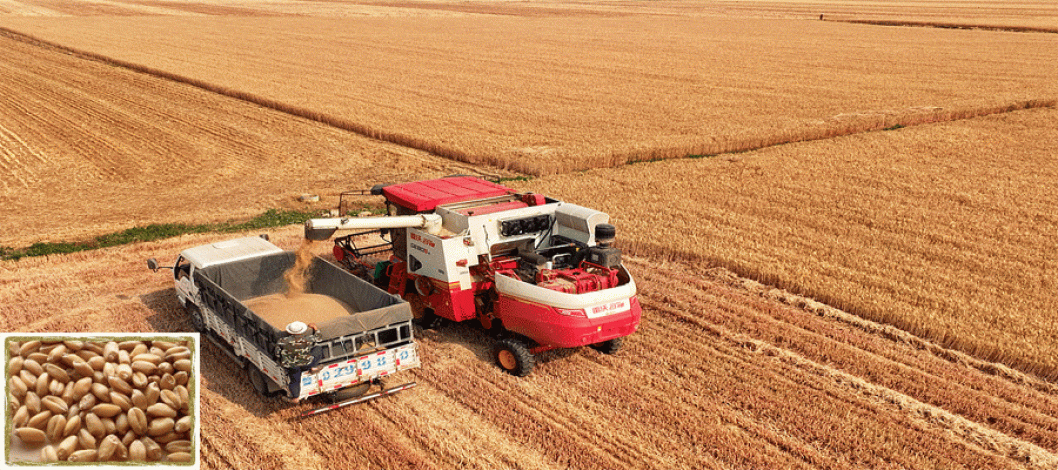
China’s domestic wheat harvest campaign will enter full swing early June, with 35% of national acreage already harvested as of June 2, according to China’s Ministry of Agriculture and Rural Affairs. Despite heavy rains in late May, no major crop damage is anticipated for now, a local grains broker said.
You
can learn about South Asia's largest exhibition on the agricultural topic
through this link: http://graintechbd.com/
Source: Online/GFMM























Comment Now