




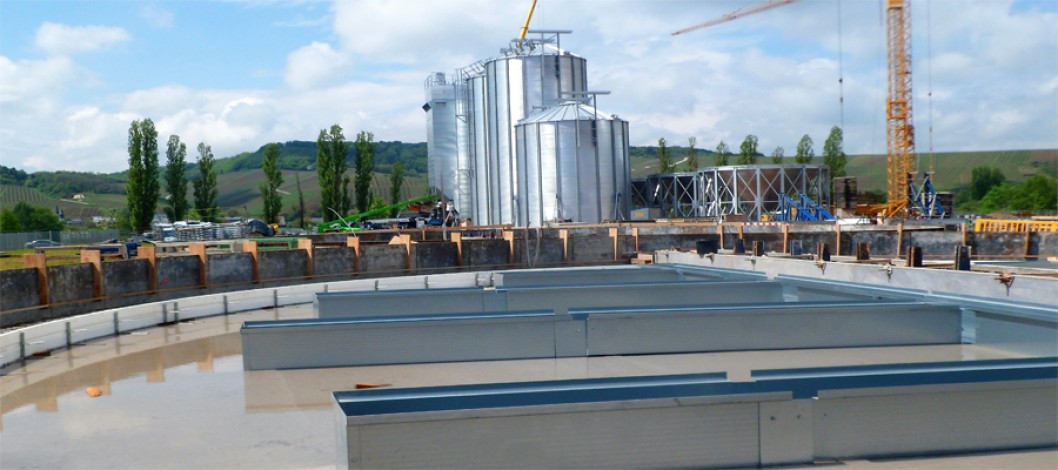
Aeration is one of the most critical factors in the safe and efficient storage of cereals in industrial silos. Efficient ventilation allows for the control of grain temperature and humidity, reduces the risk of condensation, minimises the occurrence of insects and mould, and preserves product quality during long periods of storage. Furthermore, a properly sized system helps to reduce financial losses and optimise the facility’s energy consumption.
In this article, we will explore why aeration is essential and the different systems available to ensure optimal storage.
At Symaga, we develop aeration solutions tailored to each project, designed in accordance with international recommendations to ensure safe, efficient and cost-effective storage.
1 Cereal preservation: the main objective
Cereal is a living product that continues to breathe once stored. During this process, it consumes oxygen and produces carbon dioxide, moisture and heat. If these conditions are not properly controlled, this can lead to rises in temperature, condensation and pockets of spoilage that directly affect the quality of the grain.
The main factors influencing preservation are:
*Moisture content of the grain and the ambient air.
*Temperature fluctuations within the silo.
*The growth of mould, bacteria and insects.
*The natural respiration of the grain during storage.
Proper ventilation helps maintain uniform conditions throughout the entire grain mass, preventing the formation of hot spots and significantly reducing the risk of spoilage.
Its main benefits include:
*Moisture control to prevent the growth of mould.
*Uniform temperature throughout the silo.
*Reduction in pests and infestations.
*Improved gas exchange during the grain’s respiration.
Ventilation in accordance with international standards
The sizing of a ventilation system must be based on the type of grain, climatic conditions and the silo’s capacity.
As a guide, the ASAE standard recommends air flow rates for wheat storage equivalent to between 2.5 and 5 air changes per hour, thereby ensuring suitable conditions for the preservation of the product.
At Symaga, all aeration systems are designed in accordance with these technical criteria to ensure maximum performance from each installation.
2 Reducing losses means increasing profitability
Insufficient aeration can lead to significant financial losses resulting from grain deterioration.
Among the most common are:
*Weight loss due to evaporation and the grain’s respiration.
*A decline in commercial quality due to mould growth.
*Infestations by insects and mites.
*The emergence of mycotoxin-producing fungi that can render the stored batch completely unusable.
Investing in a suitable aeration system enables:
*Preserving the quality of the grain for longer.
*Maintaining germination capacity in seeds.
*Reducing storage losses.
*Complying with the moisture and temperature specifications required by the market.
*Protecting the economic value of the stored product.
3 Efficient aeration with lower energy consumption
Although aeration requires the operation of fans, a correctly sized system results in very low energy consumption relative to the benefits it provides.
Modern systems are designed to operate only when storage conditions require it, using high-efficiency fans and selecting the appropriate power rating for each silo.
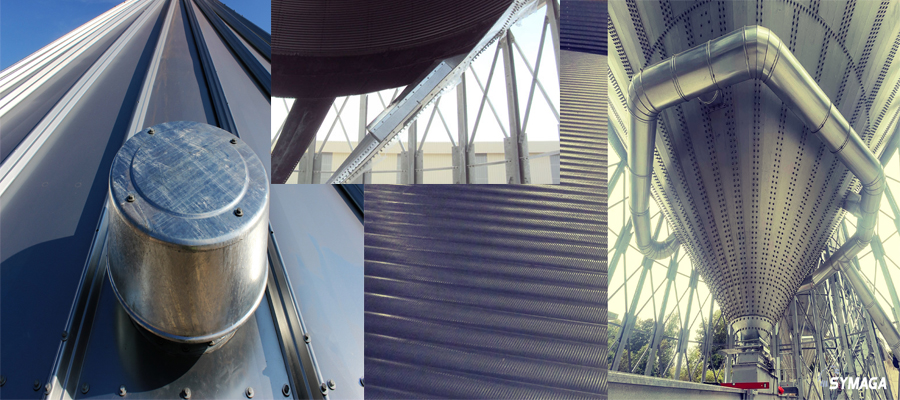
This enables:
*Reduced electricity consumption.
*Minimised wear and tear on equipment.
*Lower maintenance costs.
*A rapid return on investment thanks to reduced grain losses.
In most facilities, the investment in aeration pays for itself within a short period thanks to the savings made in product preservation.
4 Symaga aeration solutions
Every project has specific requirements. For this reason, Symaga offers a range of aeration systems tailored to the type of silo, storage capacity and product to be preserved.
Aeration in standard foundation
Flat-bottom silos can incorporate different configurations of perforated channels depending on the level of aeration required.
The Type Y, Type H and Type HA solutions cater for different air flow requirements, incorporating one or more fans depending on the size of the silo and the level of air renewal required.
Aeration for conical foundations
In silos with conical foundations, air distribution requires a specific design to ensure uniform circulation throughout the entire grain mass.
The systems developed by Symaga ensure uniform ventilation even in complex geometries.
Full Perforated Floor
The Full Aeration Floor system provides aeration of 100 per cent of the silo’s surface area via a fully perforated floor supported by a metal structure.
This solution offers maximum uniformity in air distribution and is particularly recommended for installations where comprehensive temperature and humidity control is required.
Its main advantages include:
*Uniform air distribution.
*Greater preservation efficiency.
*Full access for cleaning operations.
*Compatibility with bottom sweepers.
*Easy integration with other discharge systems.
Inside Perforate Cone
The Inside Perforate Cone system combines the advantages of an inner hopper with comprehensive aeration of the silo base.
Its design ensures excellent ventilation conditions whilst facilitating the discharge of grain.
It is available in different configurations depending on the height and angle of inclination required for each project.
Ventilation in hoppers
Hoppers can incorporate internal ventilation channels or collector ring systems that distribute air evenly via a single fan.
This solution improves temperature and humidity control during storage, reducing the risk of condensation and facilitating maintenance of the facility.
Roof ventilation
Proper air extraction is just as important as its distribution at the base of the silo.
Ventilation nozzles fitted to the roof allow hot, humid air accumulated inside to be removed, preventing condensation and ensuring a constant flow of ventilation.
They are also essential for preventing the vacuum effect during discharge operations.
For facilities requiring phytosanitary treatments, Symaga offers various fumigation accessories, including:
*Fumigant baskets.
*Gas recirculation pipes.
*Specific components to optimise the distribution of the treatment throughout the entire grain mass.
*How to choose the right ventilation system?
Selecting the most appropriate system depends on various factors, including:
*Type of grain stored.
*Grain size.
*Silo capacity.
*Type of foundation.
*Storage requirements.
*Project budget.
Symaga’s technical team carries out the sizing of each installation using specific calculation tools and technical documentation, enabling them to select the most suitable system and fan for each application.
Conclusion
Proper aeration is one of the key elements in ensuring the safety and profitability of any grain storage facility.
As well as preserving product quality, a well-designed aeration system reduces losses, improves energy efficiency and extends the shelf life of the stored grain.
Thanks to its extensive experience in international projects, Symaga offers aeration solutions tailored to any type of silo and storage requirement, always in accordance with technical recommendations and international standards.
If you would like to find out which aeration system is best suited to your project, our technical team will be delighted to advise you and design the solution that best meets your needs.
Milagros Urbina, R&D Engineer, SYMAGA
You
can learn about South Asia's largest exhibition on the agricultural topic
through this link: http://graintechbd.com/
Source: Email/GFMM










Comment Now