Home
Editorial Calendar
Metal Industry: The Backbone of Modern Agriculture and Food Security
Story in: November-2026
Story: Metal Industry: The Backbone of Modern Agriculture and Food Security
Agriculture is rapidly transforming from traditional, labor-intensive farming to a technology-driven industry. At the heart of this transformation is the metals industry, which supplies steel, iron, aluminum, stainless steel, copper, and other metal products needed for agricultural machinery, irrigation systems, storage, food processing equipment, and smart farming technologies. Increasing productivity has become a strategic priority due to increasing global food demand and increasing pressure on agricultural land and water resources. Metal-based machinery and infrastructure are enabling farmers and agribusinesses to produce more efficiently, reduce post-harvest losses, and strengthen food security.
Therefore, the development of a strong metals and engineering industry for Bangladesh and other emerging agricultural economies can play a critical role in modernizing the entire agricultural value chain. Agricultural machinery is arguably the driving force behind farm mechanization. Agricultural mechanization is one of the most visible contributions of the metals industry to agriculture. Tractors, power tillers, plows, cultivators, seeders, planters, threshers, combine harvesters, and agricultural sprayers—all rely heavily on metal components. Steel provides the necessary strength and durability for equipment used in harsh field conditions, while aluminum and other lightweight metals help reduce the weight of the equipment and increase its efficiency.
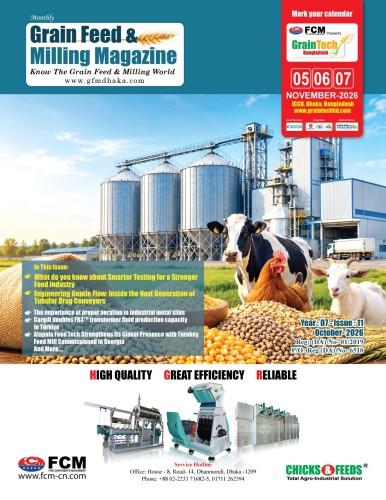
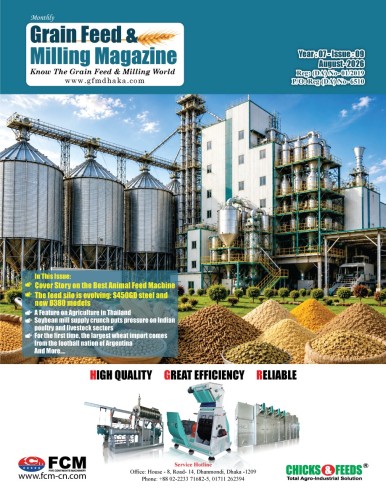
In Bangladesh, where rice is a major agricultural commodity, mechanization for land preparation, planting, and harvesting has become increasingly important. Rice transplanters, reapers, combine harvesters, and threshers can reduce reliance on manual labor and allow farmers to complete important tasks in a shorter period of time. This expansion of agricultural mechanization has created a demand not only for complete machinery, but also for metal fabrication, precision parts, spare parts, cutting tools, bearings, shafts, gears, and specialized engineering products. Steel is one of the most important components supporting modern agriculture. Its uses extend far beyond tractors and agricultural machinery. Steel is used in irrigation pumps, grain silos, warehouses, conveyors, elevators, dryers, feed mills, poultry equipment, dairy processing machinery, and food processing plants.
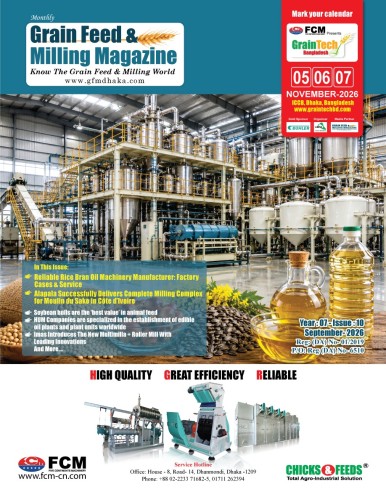
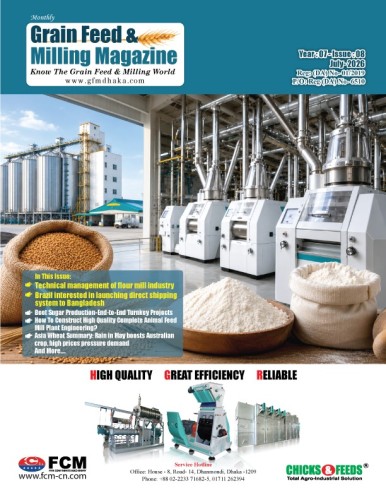
Thus, the expansion of commercial agriculture creates demand in various sectors of the steel and engineering industries. Agricultural machinery manufacturers require fabricated steel structures and precision-engineered parts. Food processing plants require stainless steel equipment for hygienic processing. Grain transport centers require structural steel, conveyors, elevators, and storage systems. This establishes an important link between agricultural investment and industrial development. As agricultural production becomes increasingly commercialized, the demand for sustainable and efficient metal-based infrastructure is likely to increase throughout the food supply chain.
Water management is essential for agricultural productivity, especially in regions affected by seasonal rainfall variations. Metal products are widely used in irrigation infrastructure, including pumps, pipes, valves, fittings, water tanks, sprinkler systems, and supporting structures. Steel and other metals provide the mechanical strength needed to operate irrigation equipment reliably over long periods of time. Modern irrigation systems can also help farmers increase water use efficiency and reduce unnecessary costs. For Bangladesh, where agriculture is closely linked to the monsoon cycle and groundwater availability, effective irrigation technology is particularly important to maintain crop production across the seasons. The development of locally manufactured irrigation equipment and metal components can reduce dependence on imported equipment and create opportunities for domestic engineering firms.
Metals play a major role in post-harvest management. Modern grain storage facilities use steel structures and equipment in the following areas: The expansion of food processing is creating another major area of demand for the metal industry. Stainless steel is widely used in food processing equipment due to its corrosion resistance, easy cleanability, and suitability for hygienic applications. Agriculture is also entering the era of precision and smart farming. GPS-guided tractors, automated planting systems, robotic equipment, sensor-based irrigation, automated harvesting equipment, and precision fertilizer application systems require advanced mechanical and electronic components.
Bangladesh has a large agricultural sector, a growing manufacturing base, and a growing demand for agricultural machinery and food processing technology. Agriculture and metal production should not be viewed as separate sectors. It creates a powerful cycle. For example: metal production → agricultural machinery → farm mechanization → higher productivity → improved processing and preservation → reduced food waste → stronger food security.
Strengthening this connection can help Bangladesh build a more integrated agricultural and industrial economy. Investors can invest in metal fabrication, engineering components, agricultural machinery assembly, industrial automation, storage systems, crop management, food processing equipment. -Editor




Home Editorial Calendar Metal Industry: The Backbone of Modern Agriculture and Food Security
Story: Metal Industry: The Backbone of Modern Agriculture and Food Security
Agriculture is rapidly transforming from traditional, labor-intensive farming to a technology-driven industry. At the heart of this transformation is the metals industry, which supplies steel, iron, aluminum, stainless steel, copper, and other metal products needed for agricultural machinery, irrigation systems, storage, food processing equipment, and smart farming technologies. Increasing productivity has become a strategic priority due to increasing global food demand and increasing pressure on agricultural land and water resources. Metal-based machinery and infrastructure are enabling farmers and agribusinesses to produce more efficiently, reduce post-harvest losses, and strengthen food security.
Therefore, the development of a strong metals and engineering industry for Bangladesh and other emerging agricultural economies can play a critical role in modernizing the entire agricultural value chain. Agricultural machinery is arguably the driving force behind farm mechanization. Agricultural mechanization is one of the most visible contributions of the metals industry to agriculture. Tractors, power tillers, plows, cultivators, seeders, planters, threshers, combine harvesters, and agricultural sprayers—all rely heavily on metal components. Steel provides the necessary strength and durability for equipment used in harsh field conditions, while aluminum and other lightweight metals help reduce the weight of the equipment and increase its efficiency.
In Bangladesh, where rice is a major agricultural commodity, mechanization for land preparation, planting, and harvesting has become increasingly important. Rice transplanters, reapers, combine harvesters, and threshers can reduce reliance on manual labor and allow farmers to complete important tasks in a shorter period of time. This expansion of agricultural mechanization has created a demand not only for complete machinery, but also for metal fabrication, precision parts, spare parts, cutting tools, bearings, shafts, gears, and specialized engineering products. Steel is one of the most important components supporting modern agriculture. Its uses extend far beyond tractors and agricultural machinery. Steel is used in irrigation pumps, grain silos, warehouses, conveyors, elevators, dryers, feed mills, poultry equipment, dairy processing machinery, and food processing plants.
Thus, the expansion of commercial agriculture creates demand in various sectors of the steel and engineering industries. Agricultural machinery manufacturers require fabricated steel structures and precision-engineered parts. Food processing plants require stainless steel equipment for hygienic processing. Grain transport centers require structural steel, conveyors, elevators, and storage systems. This establishes an important link between agricultural investment and industrial development. As agricultural production becomes increasingly commercialized, the demand for sustainable and efficient metal-based infrastructure is likely to increase throughout the food supply chain.
Water management is essential for agricultural productivity, especially in regions affected by seasonal rainfall variations. Metal products are widely used in irrigation infrastructure, including pumps, pipes, valves, fittings, water tanks, sprinkler systems, and supporting structures. Steel and other metals provide the mechanical strength needed to operate irrigation equipment reliably over long periods of time. Modern irrigation systems can also help farmers increase water use efficiency and reduce unnecessary costs. For Bangladesh, where agriculture is closely linked to the monsoon cycle and groundwater availability, effective irrigation technology is particularly important to maintain crop production across the seasons. The development of locally manufactured irrigation equipment and metal components can reduce dependence on imported equipment and create opportunities for domestic engineering firms.
Metals play a major role in post-harvest management. Modern grain storage facilities use steel structures and equipment in the following areas: The expansion of food processing is creating another major area of demand for the metal industry. Stainless steel is widely used in food processing equipment due to its corrosion resistance, easy cleanability, and suitability for hygienic applications. Agriculture is also entering the era of precision and smart farming. GPS-guided tractors, automated planting systems, robotic equipment, sensor-based irrigation, automated harvesting equipment, and precision fertilizer application systems require advanced mechanical and electronic components.
Bangladesh has a large agricultural sector, a growing manufacturing base, and a growing demand for agricultural machinery and food processing technology. Agriculture and metal production should not be viewed as separate sectors. It creates a powerful cycle. For example: metal production → agricultural machinery → farm mechanization → higher productivity → improved processing and preservation → reduced food waste → stronger food security.
Strengthening this connection can help Bangladesh build a more integrated agricultural and industrial economy. Investors can invest in metal fabrication, engineering components, agricultural machinery assembly, industrial automation, storage systems, crop management, food processing equipment. -Editor
SHeare