



Photo: Collected
While the looming EU Deforestation Regulation (EUDR) has been nudging corporate behavioral changes in Europe, the coffee industry remains among the weakest performers on several key indicators of deforestation risk, according to the 2026 edition of the Forest 500 report from UK-based environmental NGO Global Canopy.
Now in its 12th year, the Forest 500 annually assesses 500 companies with the greatest influence over nine forest-risk commodities — beef, cocoa, coffee, leather, palm oil, pulp and paper, rubber, soy and timber — based solely on public disclosures on company websites.
It should be noted that Global Canopy has publicly argued against further EUDR delays and simplification. For the Forest 500 list, the group names Climate Arc and the Norwegian Agency for Development Cooperation (Norad) as financial supporters.
“While some battles have been won, this year’s Forest 500 data shows that the fight against deforestation is still being needlessly lost,” the report’s executive summary states. “The year 2025 was at the heart of high-profile corporate targets to end deforestation — but these have now been missed. As in previous years, too few companies are acting with enough urgency.”
Action (and Inaction) Across Sectors
The report says 68 of the 500 companies, or 14%, cited the EUDR in public documents tied to deforestation action. Separately, public evidence of traceability mechanisms improved across eight of the nine commodities.
However, the report describes the EUDR itself as arriving “in a delayed and diluted form” after the EU postponed application to Dec. 30, 2026, for large and medium operators and traders, and to June 30, 2027, for micro and small operators.
Designed to prevent new deforestation in European supply chains, the law was adopted in 2023 with enforcement originally scheduled for the end of 2024.
Coffee Sector Performance
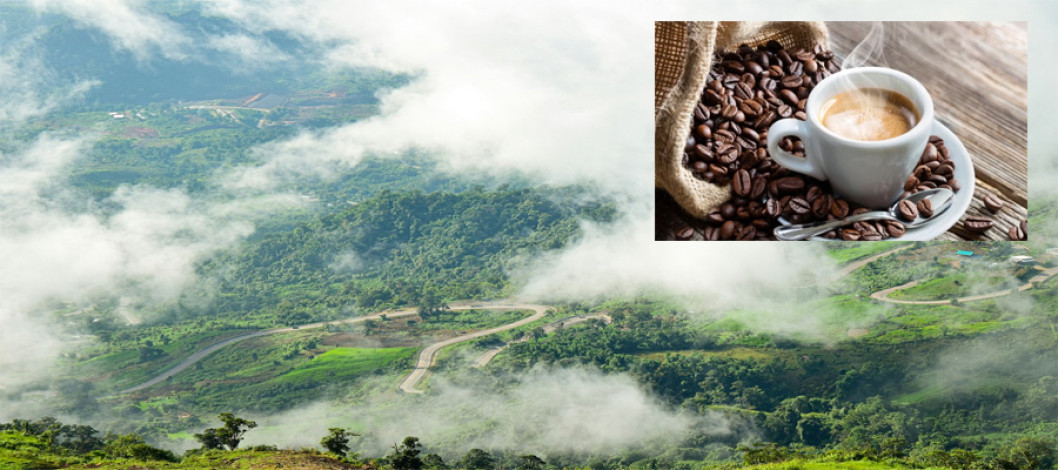
For coffee specifically, the picture is mixed. The share of Forest 500 companies with a public deforestation-free commitment for coffee rose to 47% in 2025, up from 44% in 2024. Coffee traceability mechanisms also improved to 18%, up from 14%.
However, on one of the most concrete measures — the share of companies publicly reporting that more than half their coffee volumes are deforestation- and conversion-free — coffee ranked near the bottom of the nine commodities at just 5%, down from 7% a year earlier. Only leather scored lower, at 1%.
Leaders, Laggards and Backtrackers
The Forest 500 report gives each company a percentage score based on what it publicly discloses on its own website, with 25% of the score tied to the strength of its commitments and the other 75% tied to implementation, reporting and verification.
The report also sorts companies into three broad categories: “Leaders” have strong deforestation commitments for all the commodities they are assessed for and report significantly stronger implementation than most; “Late Majority” companies have signaled some intent to tackle deforestation but have made only partial commitments and/or achieved weak progress on implementation; and “Laggards” have no zero-deforestation or conversion commitments. Separately, the report says 14 companies backtracked on deforestation action, while 24 “persistent laggards” have failed to publish any deforestation commitment since 2014.
Among the coffee-relevant companies highlighted, Nestlé is the only one in the “leader” group. It scored 71%, and the report says it disclosed that at least 80% of its volumes in beef, coffee, palm oil, pulp and paper and soy were deforestation- and conversion-free in 2025.
One coffee-specific company appears in the report’s “laggard” category, Italian company FinLav (23%). Vietnamese coffee company Thang Loi Coffee Joint Stock Company is among the 14 companies the report identifies as “backtrackers.”
Among “late majority” companies were roasters/buyers such as Starbucks (36%), JDE Peet’s (41%), Keurig Dr Pepper (26%) and JM Smucker (14%). On the trading side, the report also gave scores to Louis Dreyfus (65%), Neumann Kaffee Gruppe (45%), Ecom Agroindustrial (38%) and Sucafina (36%).
The report captures only a slice of the global coffee industry, and it evaluates what companies publicly disclose on their own websites rather than directly verifying all on-the-ground performance.
The full report is available from Forest 500.
You can learn about South Asia's
largest exhibition on this topic through this link: https://teacoffeebd.com/
Source: Online/GFMM












Comment Now